Current Projects
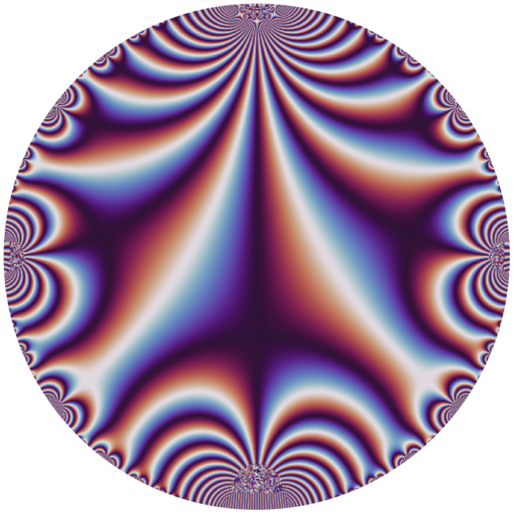
Modular forms and their applications to black holes in string theory
Collaborators: Dr. Nabamita Banerjee.
In this project, which forms the main content of my MS thesis, I am studying the connection between modular forms (elliptic, Jacobi and Siegel) and other objects from number theory, such as \(L\)-functions, and the microscopic description of supersymmetric black holes in string theory. The partition functions of such black holes are found to be modular or mock-modular. The aim is to study the physics background (including 2d CFT, superstring theory, and BPS states) and the mathematical properties to have a deeper understanding of the connection and the role played by these functions in the attractor mechanism, wall-crossing phenonmena, moonshine, rational CFT, and quantum chaos. I am also working on appearance of mock-modularity in CHL orbifolds of \(\mathcal{N}=4\) theories on \(K3 \times T^2\).
See my notes here. (INCOMPLETE)
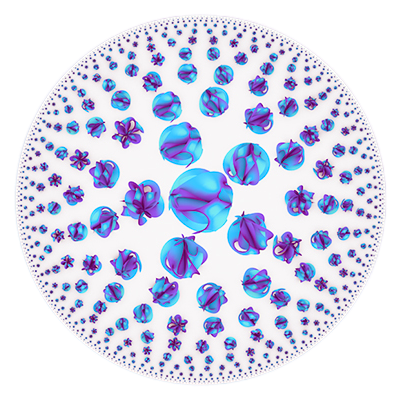
Supersymmetric boundary conditions for higher spin gravity in \(AdS_3\) and droplets
Collaborators: Dr. Nabamita Banerjee, Prof. Suvankar Dutta, Mr. Soumava Kundu.
Three-dimensional gravity can be formulated in terms of a Chern-Simons theory which has no degrees of freedom in the bulk and the dynamics are given by the asymptotic boundary conditions. In this project, we aim to introduce new sets of supersymmetric boundary conditions for higher spin 3d gravity with negative cosmological constant, and study its dual (geometric) description in terms of 2d Fermi droplets.
Past Projects
Eliashberg study of magnon-mediated superconductivity
Collaborators: Prof. Rajdeep Sensarma.
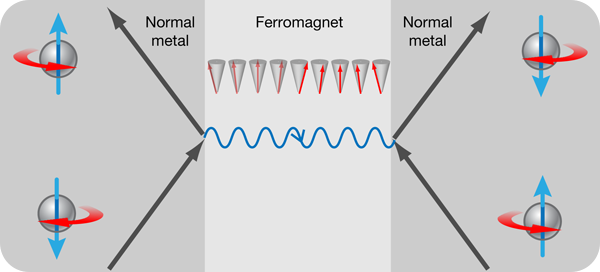
Eliashberg theory is a strong-coupling theory of superconductivity. It describes electron-phonon interaction leading to superconductivity using a quantum field theoretic framework with explicit phonon dynamics. In this project, I derived new sets of Eliashberg equations which include various types of electron-boson interactions, and non-trivial material effects such as the presence of spin-orbit interaction. We then specialised, and developed a model for magnon-mediated superconductivity in a metal via interfacial coupling to ferromagnetic insulators. I studied the properties of this model analytically and numerically.
See my notes here: spin-orbit, magnon-mediated superconductivity.
Interplay between charge density waves and s-wave superconductivity
Collaborators: Prof. Amit Ghosal.
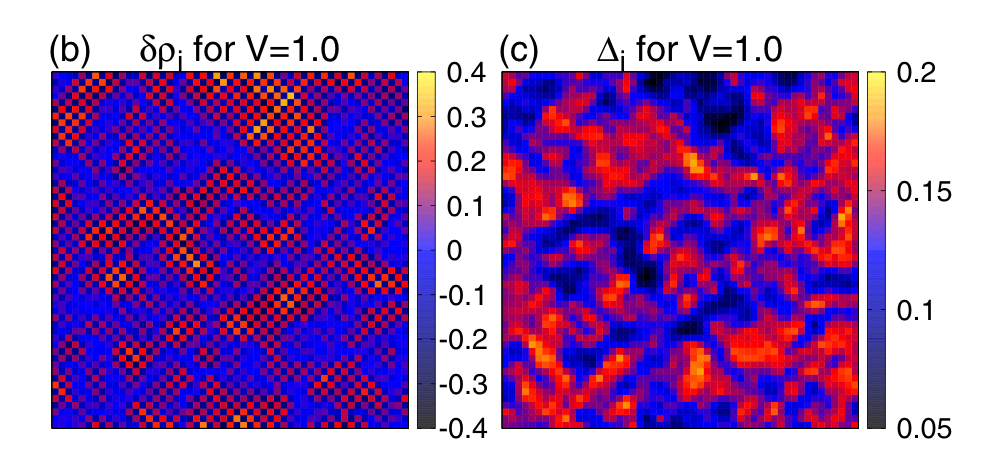
In this project I studied the dynamics of charge density wave order and s-wave superconducting order in clean and disordered 2d systems, by simulating the problem using an attractive Hubbard model on a square lattice. We tried to extend the numerics to more complex but realistic systems, such as transition metal dichalcogenides, which have triangular lattices and multiple layers.